Showing posts with label knowledge. Show all posts

Thursday, March 14, 2019

Survey for Searching Oil and Gas

searching oil gas source for drilling
Sesmic Survey

The search for oil and gas requires a knowledge of geography, geology and geophysics. Crude oil is usually found in certain types of geological structures, such as anticlines, fault traps and salt domes, which lie under various terrains and in a wide range of climates. After selecting an area of interest, many different types of geophysical surveys are conducted and measurements performed in order to obtain a precise evaluation of the subsurface formations, including:

  • Magnetometric surveys. Magnetometers hung from airplanes measure variations in the earth’s magnetic field in order to locate sedimentary rock formations which generally have low magnetic properties when compared to other rocks.

  • Aerial photogrammetric surveys. Photographs taken with special cameras in airplanes, provide three-dimensional views of the earth which are used to determine land formations with potential oil and gas deposits.

  • Gravimetric surveys. Because large masses of dense rock increase the pull of gravity, gravimeters are used to provide information regarding underlying formations by measuring minute differences in gravity.

  • Seismic surveys. Seismic studies provide information on the general characteristics of the subsurface structure. Measurements are obtained from shock waves generated by setting off explosive charges in small-diameter holes, from the use of vibrating or percussion devices on both land and in water, and from underwater blasts of compressed air. The elapsed time between the beginning of the shock wave and the return of the echo is used to determine the depth of the reflecting substrata. The recent use of super-computers to generate three-dimensional images greatly improves evaluation of seismic test results.
  • Radiographic surveys. Radiography is the use of radio waves to provide information similar to that obtained from seismic surveys.
  • Stratigraphic surveys. Stratigraphic sampling is the analysis of cores of subsurface rock strata for traces of gas and oil. A cylindrical length of rock, called a core, is cut by a hollow bit and pushed up into a tube (core barrel) attached to the bit. The core barrel is brought to the surface and the core is removed for analysis.


When the surveys and measurements indicate the presence of formations or strata which may contain petroleum, exploratory wells are drilled to determine whether or not oil or gas is actually present and, if so, whether it is available and obtainable in commercially viable quantities.
Read MoreSurvey for Searching Oil and Gas

Compressed Natural Gas and Liquefied Hydrocarbon Gases

Hydrocarbon Gases
LNG

The composition of naturally occurring hydrocarbon gases is similar to crude oils in that they contain a mixture of different hydrocarbon molecules depending on their source. They can be extracted as natural gas (almost free of liquids) from gas fields; petroleum-associated gas which is extracted with oil from gas and oil fields; and gas from gas condensate fields, where some of the liquid components of oil convert into the gaseous state when pressure is high (10 to 70 mPa). When the pressure is decreased (to 4 to 8 mPa) condensate containing heavier hydrocarbons separates from the gas by condensation. Gas is extracted from wells reaching up to 4 miles (6.4 km) or more in depth, with seam pressures varying from 3 mPa up to as high as 70 mPa.

Natural gas contains 90 to 99% hydrocarbons, which consist predominately of methane (the simplest hydrocarbon) together with smaller amounts of ethane, propane and butane. Natural gas also contains traces of nitrogen, water vapour, carbon dioxide, hydrogen sulphide and occasional inert gases such as argon or helium. Natural gases containing more than 50 g/m3 of hydrocarbons with molecules of three or more carbon atoms (C3 or higher) are classified as “lean” gases.

Depending how it is used as a fuel, natural gas is either compressed or liquefied. Natural gas from gas and gas condensate fields is processed in the field to meet specific transportation criteria before being compressed and fed into gas pipelines. This preparation includes removal of water with driers (dehydrators, separators and heaters), oil removal using coalescing filters, and the removal of solids by filtration. Hydrogen sulphide and carbon dioxide are also removed from natural gas, so that they do not corrode pipelines and transportation and compression equipment. Propane, butane and pentane, present in natural gas, are also removed before transmission so they will not condense and form liquids in the system. (See the section “Natural gas production and processing operations.”)

Natural gas is transported by pipeline from gas fields to liquefication plants, where it is compressed and cooled to approximately –162 °C to produce liquefied natural gas (LNG). The composition of LNG is different from natural gas due to the removal of some impurities and components during the liquefaction process. LNG is primarily used to augment natural gas supplies during peak demand periods and to supply gas in remote areas away from major pipelines. It is regasified by adding nitrogen and air to make it comparable to natural gas before being fed into gas supply lines. LNG is also used as a motor-vehicle fuel as an alternative to gasoline.

Petroleum-associated gases and condensate gases are classified as “rich” gases, because they contain significant amounts of ethane, propane, butane and other saturated hydrocarbons. Petroleum-associated and condensate gases are separated and liquefied to produce liquefied petroleum gas (LPG) by compression, adsorption, absorption and cooling at oil and gas process plants. These gas plants also produce natural gasoline and other hydrocarbon fractions.

Unlike natural gas, petroleum-associated gas and condensate gas, oil processing gases (produced as by-products of refinery processing) contain considerable amounts of hydrogen and unsaturated hydrocarbons (ethylene, propylene and so on). The composition of oil processing gases depends upon each specific process and the crude oils used. For example, gases obtained as a result of thermal cracking usually contain significant amounts of olefins, while those obtained from catalytic cracking contain more isobutanes. Pyrolysis gases contain ethylene and hydrogen.

Combustible natural gas, with a calorific value of 35.7 to 41.9 MJ/m3 (8,500 to 10,000 kcal/m3), is primarily used as a fuel to produce heat in domestic, agricultural, commercial and industrial applications. The natural gas hydrocarbon also is used as feedstock for petrochemical and chemical processes. Synthesis gas (CO + H2) is processed from methane by oxygenation or water vapour conversion, and used to produce ammonia, alcohol and other organic chemicals. Compressed natural gas (CNG) and liquefied natural gas (LNG) are both used as fuel for internal combustion engines. Oil processing liquefied petroleum gases (LPG) have higher calorific values of 93.7 MJ/m3 (propane) (22,400 kcal/m3) and 122.9 MJ/m3 (butane) (29,900 kcal/m3) and are used as fuel in homes, businesses and industry as well as in motor vehicles (NFPA 1991). The unsaturated hydrocarbons (ethylene, propylene and so on) derived from oil processing gases may be converted into high-octane gasoline or used as raw materials in the petrochemical and chemical-processing industries.
Read MoreCompressed Natural Gas and Liquefied Hydrocarbon Gases

Sunday, March 10, 2019

CEMENTING ADDITIVES CHEMICAL

chemical for well drilling
Cementing Additive Chemical

Additional chemicals are used to control slurry density, rheology, and fluid loss, or to provide
more specialized slurry properties. Additives modify the behavior of the cement slurry allowing cement placement under a wide range of downhole conditions. There are many additives available for cement and these can be classified under one of the following categories:

Accelerators: Most operators wait for cement to reach a minimum compressive strength of 500 psi before resuming operations. At temperatures below l00 °F common cement may require a day or two to develop this strength level. chemicals which reduce the thickening time of a slurry and increase the rate of early strength development. Low concentrations of cement accelerators (2-4% by weight of cement) are used to shorten the setting time of cement and promote rapid strength development.They are usually use in conductor and surface casing to reduce waiting on cement time (WOC). Calcium chloride (CaCl2), sodium chloride (NaCl) and sea water are commonly used as accelerators.

Retarders: chemicals which retard the setting time (extend the thickening) of a slurry to aid cement placement before it hardens. Retarders Increased well depths and formation temperatures require the use of cement retarders to extend the pumpability of cements. Most retarders also affect cement viscosity to some extent..These additives are usually added to counter the effects of high temperature.They are used in cement slurries for intermediate and production casings, squeeze and cement plugs and high temperature wells. Typical retarders include: sugar; lignosulphonates, hydroxycarboxylic acids, inorganic compounds and cellulose derivatives.

Retarders work mainly by adsorption on the cement surface to inhibit contact with water and
elongate the hydration process; although there are other chemical mechanisms involved.

Lignosulfonates are used to about 200°F bottom-hole circulating temperature (BHCT). Concentrations of 0.1% to 1% are used in most slurry applications to give both predictable thickening times and compressive strength.

Organic acids can be used from about 200°-400°F BHCT. They are used on concentrations of 0.1% to 2.5% by weight of cement as effective retarders for high temperature environments.

Extenders: materials which lower the slurry density and increase the yield to allow weak
formations to be cemented without being fractured by the cement cloumn.Examples of
extenders include: water, bentonite, sodium silicates, pozzlans, gilsonite, expanded perlite,
nitrogen and ceramic microspheres. Bentonite clay can be used in concentrations up to 25%
by weight of Portland cement to decrease the density.

Weighting Agents (density adjusters): materials which increase slurry density including barite and haematite High-density slurries are used to cement high-pressure wells where increased hydrostatic head is required to hold down gas or fluids. 

- Hematite, sp. gr. of 5, is used to increase slurry density to 21 1b/gal. Barite, sp. gr. 4.2 can
increase slurry weight to 18Ib/gal.

- Sand, sp.gr. 2.65, has a low water requirement and helps to densify slurries to 17.5Ib/gal.

Dispersants: chemicals which lower the slurry viscosity and may also increase free water by dispersing the solids in the cement slurry. Dispersants are solutions of negatively charged polymer molecules that attach themselves to the positively charges sites of the hydrating cement grains.The result is an increased negative on the hydrating cement grains resulting in greater repulsive forces and particle dispersion.

The most common dispersants are aryl-alkyl sulphonates used in concentrations of 0.3% to 2% by weight of cement polyphosphate, lignosulfonate, salt and organic acid.

Fluid-Loss Additives: Excessive fluid losses from the cement slurry to the formation can affect the correct setting of cement. Fluid loss additives are used to prevent slurry dehydration and reduce fluid loss to the formation.Examples include: cationic polymer, nonionic synthetic polymer, anionic synthetic polymer and cellulose derivative.

Lost Circulation Control Agents: materials which control the loss of cement slurry to weak or fractured formations.

Strength Retrogression: At temperatures above 230 F, normal cement develop high permeability and reduction in strength. the addition of 30-40% BWOC (by weight of cement) silica flour prevents both strength reduction and development of permeability at high temperatures.

Miscellaneous Agents: e.g. Anti-foam agents, fibres, latex.
Read MoreCEMENTING ADDITIVES CHEMICAL

PDC BITS APPLICATIONS

type of bit for drilling oil gas well
PDC Bit

PDC bits have been used extensively and successfully over a wide range of formation types. The lack of rotating parts leads to greater life expectancy and as such long bit runs are achievable with resultant time and cost savings. A thorough review of the economics of running a PDC bit needs to be performed prior to selection due to its increased cost. 

The following guidelines list the typical applications of PDC bits.
  1. PDC bits are typically useful for drilling long, soft to medium shale sequences which have a low abrasivity. In such formations they typically exhibit high ROP and extended life enabling entire sections to be drilled on one run.
  2. PDC bits are not usually appropriate for highly abrasive well cemented sand sequences.When drilling tight siliceous formations the incidence of PDC chipping and breaking is dramatically increased resulting in less than expected ROP and bit life.
  3. When drilling heterogeneous formations containing alternating shales and or shale limestone sequences the use of hybrid PDC bits is encouraged. This bit incorporates the use of back-up diamond studs behind the PDC cutter. When drilling harder abrasive strings, the diamond stud absorbs the increased weight required to drill the stringer and prevents premature damage and wear to the PDC cutter.
  4. The use of bladed hybrid PDC bits is recommended for drilling hard formations. The deep watercourse on these bits enable optimum fluid flow across the cutter to efficiently reduce the friction temperatures induced. This efficient cooling will help minimise fracture of the PDC cutters.
  5. When drilling mobile, plastic formations such as salt sections the use of eccentric PDC bits should be considered. These bits have proved successful in preventing incidence of stuck pipe in many areas where salt flow problems are experienced.
Read MorePDC BITS APPLICATIONS

Friday, March 8, 2019

Multilateral Drilling

multi lateral hole drilling oil gas
Multilateal Drilling

Sometimes oil and natural gas reserves are located in separate layers underground and multilateral drilling allows producers to branch out from the main well to tap reserves at different depths.

This increases production from a single well and reduces the number of wells drilled on the surface.

A multilateral well is a single well with one or more wellbore branches radiating from the main borehole.

It may be an exploration well, an infill development well or a reentry into an existing well.

It may be as simple as a vertical wellbore with one sidetrack or as complex as a horizontal, extended-reach well with multiple lateral and sublateral branches.

General multi- lateral configurations include:

  • Multibranched wells, forked wells, wells with several laterals branching from one horizontal main wellbore, wells with several laterals branching from one vertical main wellbore, wells with stacked laterals, and wells with dual-opposing laterals.


These wells generally represent two basic types:

vertically staggered laterals and horizontally spread laterals in fan, spine-and-rib or dual-opposing T shapes.

A successful multilateral well that replaces several vertical wellbores can reduce overall drilling and completion costs, increase production and provide more efficient drainage of a reservoir. Furthermore, multilaterals can make reservoir management more efficient and help increase recoverable reserves.

Regardless of the level of complexity, multi- lateral wells today are drilled with state-of-the art directional drilling technology, but there is always a certain risks ranging from borehole instability, stuck pipe and problems with overpressured zones to casing, cementing and branching problems.

Advantages of multilateral systems increasingly outweigh the disadvantages.

Multilateral wells configuration enhance productivity.

In shallow or depleted reservoirs, branched horizontal wellbores are often most efficient, whereas in layered reservoirs, vertically stacked drainholes are usually best.

In fractured reservoirs, dual-opposing laterals may provide maximum reservoir exposure, particularly when fracture orientation is known (From Schlumberger Oilfield review)
Read MoreMultilateral Drilling

Horizontal Drilling

Horizontal Drilling

Horizontal drilling is a directional drilling process aimed to target oil or gas reservoir intersecting it at the “entry point” with a near-horizontal inclination, and remaining within the reservoir until the desired bottom hole location is reached.
While the construction of a directional well often costs much more than a conventional well, initial production is greater of a conventional well.
Horizontal drilling provides more contact to a reservoir formation than a vertical well and allows more hydrocarbons to be produced from a given wellbore.
For example, six to eight horizontal wells drilled from one location, or well pad, can access the same reservoir volume as 16 vertical wells.
Using multi-well pads can significantly reduce the overall number of well pads, access roads, pipeline routes and production facilities, minimizing habitat disturbance, impacts to the public and the overall environmental footprint.
Horizontal wells are usually drilled to enhance oil production and in some situations the improvement may be dramatic – enabling development of a reservoir which would otherwise have been considered uneconomic.
There are many kinds of reservoir where the potential benefits of horizontal drilling are evident:
  • in conventional reservoirs
    • Thin reservoirs; Reservoirs with natural vertical fractures;  Reservoirs where water (and gas) coning will develop; thin layered reservoirs; heterogeneous reservoirs;
  • in unconventional reservoirs
    • shale gas/oil, tight gas/oil, CBM, heavy oil, oil sands, etc
The initial vertical portion of a horizontal well is typically drilled using the same rotary drilling technique that is used to drill most vertical wells, wherein the entire drill string is rotated at the surface (the drilling of vertical sections is also possible by the use of downhole motor just above the bit, like the VertiTrak or TruTrak, where only the bit rotate while the drilling string remains firm).
From the kickoff point to the entry point the curved section of a horizontal well is drilled using a hydraulic motor mounted directly above the bit and powered by the drilling fluid.
Steering of the hole is accomplished through the employment of a slightly bent or “steerable” downhole motor (today the technology of directional drilling has improved by the use of the “RSS: Rotary Steerable System” that permit to steer an hole continuing the rotation of the drilling string. The RSS increase the safety and the drilling efficiency).
Downhole instrument packages that transmit various sensor readings to operators at the surface are included in the drill string near the bit.
Sensors provide the azimuth (direction versus north) and inclination (angle relative to vertical) of the drilling assembly and the position (x, y, and z coordinates) of the drill bit at all times.
Additional downhole sensors can be, and often are, included in the drill string, providing information on the downhole environment (bottom hole temperature and pressure, weight on the bit, bit rotation speed, and rotational torque).
They may also provide any of several measures of physical characteristics of the surrounding rock such as natural radioactivity and electrical resistance, similar to those obtained by conventional wire line well logging methods, but in this case obtained in real time while drilling ahead.
The information is transmitted to the surface via small fluctuations in the pressure of the drilling fluid inside the drill pipe.
Read MoreHorizontal Drilling

Tuesday, March 5, 2019

Basic Oil Well Drilling Knowledge

old photos drilling
Oil Drilling 

An oil well is any bore drilled through the Earth's subsurface layers and it is designed to find and gain hydrocarbons. The well is being drilled by complex dangerous methods called (drilling process) ,these methods will be discussed later. The well that is designed to produce mainly or only gas may be termed a gas well .each well has a criterion called well life which is divided into segments are:

  1. Well Planning: Well planning is perhaps the most demanding aspect of drilling engineering. It requires the integration of engineering principles, corporate or personal philosophies, and experience factors. Although well planning methods and practices may vary within the drilling industry, the end result should be a safely drilled, minimum-cost hole that satisfies the reservoir engineer’s requirements for oil and (or) gas production. 
  2. Drilling: complicated methods used to create cemented(cased) oil or gas well use heavy duty tools and at the same time very developed In terms of technological advance , these methods developed during time. The drilling process is very expensive and dangerous (discussed later). 
  3. Completion: Completion is the process in which the well is enabled to produce oil or gas, Contains: - cased-hole completion, small holes called perforations are made in the portion of the casing which passed through the production zone, to provide a path for the oil to flow from the surrounding rock into the production tubing. -open hole completion, often 'sand screens' or a 'gravel pack' is installed in the last drilled, uncased reservoir section. These maintain structural integrity of the wellbore in the absence of casing, while still allowing flow from the reservoir into the wellbore. 
  4. Production: The production stage is the most important stage of a well's life, when the oil and gas are produced. By this time, the oil rigs and workover rigs used to drill and complete the well have moved off the wellbore, and the top is usually outfitted with a collection of valves called a Christmas tree or production tree. These valves regulate pressures, control flows, and allow access to the wellbore in case further completion work is needed. From the outlet valve of the Oil Well Drilling Mahmood Jassim Page 6 production tree, the flow can be connected to a distribution network of pipelines and tanks to supply the product to refineries, natural gas compressor stations, or oil export terminals. 
  5. Abandonment: A well is said to reach an "economic limit" when its most efficient production rate does not cover the operating expenses, including taxes The economic limit for oil and gas wells can be expressed using special formulas. At the economic limit there often is still a significant amount of unrecoverable oil left in the reservoir. It might be tempting to defer physical abandonment for an extended period of time, hoping that the oil price will go up or that new supplemental recovery techniques will be perfected. In these cases, temporary plugs will be placed downhole and locks attached to the wellhead to prevent tampering. There are thousands of "abandoned" wells throughout North America, waiting to see what the market will do before "permanent" abandonment. Often, lease provisions and governmental regulations usually require quick abandonment; liability and tax concerns also may favor abandonment. In theory an abandoned well can be reentered and restored to production (or converted to injection service for supplemental recovery or for downhole hydrocarbons storage), but reentry often proves to be difficult mechanically and not cost effective.
Read MoreBasic Oil Well Drilling Knowledge

Friday, December 1, 2017

Cellar Purpose in Oil Gas Drilling Onshore


Before We talk about what is Cellar or Cellar purpose, I will mention from rig located in new well location.

Once the site has been selected, scientists survey the area to determine its boundaries, and conduct environmental impact studies if necessary. The oil company may need lease agreements, titles and right-of way accesses before drilling the land. For off-shore sites, legal jurisdiction must be determined.

After the legal issues are settled, the crew goes about preparing the land:

The land must be cleared and leveled, and access roads may be built.

Because water is used in drilling, there must be a source of water nearby. If there is no natural source, the crew drills a water well.

The crew digs a reserve pit, which is used to dispose of rock cuttings and drilling mud during the drilling process, and lines it with plastic to protect the environment. If the site is an ecologically sensitive area, such as a marsh or wilderness, then the cuttings and mud must be disposed of offsite -- trucked away instead of placed in a pit.

Once the land has been prepared, the crew digs several holes to make way for the rig and the main hole. A rectangular pit called a CELLAR is dug around the location of the actual drilling hole. The CELLAR provides a work space around the hole for the workers and drilling accessories. The crew then begins drilling the main hole, often with a small drill truck rather than the main rig. The first part of the hole is larger and shallower than the main portion, and is lined with a large-diameter conductor pipe. The crew digs additional holes off to the side to temporarily store equipment -- when these holes are finished, the rig equipment can be brought in and set up.

Depending upon the remoteness of the drill site and its access, it may be necessary to bring in equipment by truck, helicopter or barge. Some rigs are built on ships or barges for work on inland water where there is no foundation to support a rig (as in marshes or lakes).

Read MoreCellar Purpose in Oil Gas Drilling Onshore

General Step and Procedure Oil Gas Drilling in Onshore


To find oil, you cannot simply punch a hole in the ground. Perhaps, this is what many people believe.
There are many complexities involving multiple service companies and two complete teams of crews. With so much happening (and with so many difficulties regarding scheduling, safety, and environmental practices) drilling for oil is not for the faint of heart.

This is a general 51 steps for drilling in the USA, for example. 

The following steps are necessary in order to produce oil or gas from a well:
  1. 10-30 different service companies are required.
  2. Each company working on a well must adhere to around-the-clock scheduling, safety and environmental practices.
  3. Build a new road to access the rig location.
  4. Clear the area for the new rig.
  5. Build infrastructure for water and electricity around the rig site.
  6. Dig an earthen pit to prevent soil or water table contamination.
  7. Dig a pilot hole at the precise location marked by the survey crew.
  8. Dig two other holes (the “mouse” hole and the “rat” hole) nearby to hold pieces of equipment and pipe during drilling.
  9. A rig that can dig a 10,000 ft. well requires 50-75 people and 35-45 semi-trucks to move and assemble the rig.
  10. Assembly of the rig takes around 3 and a half days.
  11. A strict inspection of the rig must take place once built.
  12. Operations of the rig go on 24/7, typically ceasing only one day each year for Christmas.
  13. Two shifts of two complete crews must work the rig every day.
  14. There are two stages of drilling: 1. running and cementing of cases and 2. drilling until the bit reaches the depth of the targeted zone.
  15. Each drill bit typically lasts 4,500 – 6,500 feet of drilling.
  16. Replacing the bit requires the removal of the entire string of drill pipe in a process called “tripping out”.
  17. “Tripping out” takes several hours and requires crews to cool the bit and keep the soil and hole intact.
  18. To help keep cuttings from plugging the hole, the mud must be sent through shakers to send the cuttings into a separated area.
  19. Additional mug system equipment: de-sanders, de-silters and de-gassers, remove smaller particles and gas from the mud.
  20. Clean mud is then recirculated back down into the hole.
  21. The Blow-Out Preventer (or “BOP”) is installed on top of the casing head before drilling takes place.
  22. The BOP must have high-pressure safetly valves designed to seal off the well and block any escaping gases or liquids from the hole beneath in order to prevent a blow-out from occuring.
  23. Drilling must begin with a designated surface depth, usually around 50-100 feet below the water table.
  24. Special care must be taken to prevent contamination of the water in the water table while drilling by isolating the water table and the wall with concrete and steel encasing.
  25. New sections of pipe must be added to the string as the bit drills deeper.
  26. When the hole reaches a designated depth, the derrickhands secrete fluid through the hole to condition it for logging.
  27. A “logging tool” measures the depth and condition of the hole for the oil company.
  28. The tool gives the information of whether or not the well can indeed produce oil or gas.
  29. At this point, it must be determined whether the well is to be complete or plugged and abandoned.
  30. If the well is designated as a producer, the crew must re-insert the pipe back into the hole to ensure the hole is still intact.
  31. To test the hole, mud must be re-circulated.
  32. Once everything tests positively, the drill pipe is removed.
  33. At this point, the crew must insert the last string of production casing running the entire depth of the hole.
  34. Then, the casing is cemented in the hole.
  35. The production crew then brings in the work-over unit and rigs it up to prepare the hole for production.
  36. The crew runs small diameter tubing into the hole as a conduit for oil or gas to flow through and up the well.
  37. Next, the work over unit trips out of the hole and picks up a perforating gun.
  38. The perforating gun is lowered into the hole to production depth using a thin metal cable called a “wireline”.
  39. An electrical signal is sent down the wireline, firing the gun and igniting explosive charges.
  40. These charges create holes through the cement encasing and formation connecting the well bore to the reservoir.
  41. To stimulate the flow of hydrocarbons (or oil), sometimes it’s necessary to “frack” the well.
  42. “Fracking” involves pumping air, sand and fluids under extreme pressure down the hole and out through the perforations.
  43. This fractures or forces cracks into the formation.
  44. The remaining particles will hold the cracks open, releasing the flow of oil or gas.
  45. Monitoring the flow allows the crew to determine the best location for the “choke”.
  46. The “choke” controls the flow of the oil or gas.
  47. Once pressure is released, the hydrocarbons are allowed the escape through the fractured zone and flow into the well bore.
  48. The oil or gas can now travel up the well casing string.
  49. The well bore is isolated from the surrounding formations with casing and cement, preventing any contamination.
  50. The final step is to install a pump jack or production well-head, or what’s called the “Christmas Tree”.
  51. It’s the time to produce the well and plan for any future field development.
Watch the Video : 


Read MoreGeneral Step and Procedure Oil Gas Drilling in Onshore

Thursday, November 30, 2017

Big Shale Technology

oil gas well drilling

Shale oil engineer Oscar Portillo spends his days drilling as many as five wells at once— without ever setting foot on a rig.
Part of a team working to cut the cost of drilling a new shale well by a third, Portillo works from a Royal Dutch Shell Plc office in suburban Houston, his eyes darting among 13 monitors flashing data on speed, temperature and other metrics as he helps control rigs more than 805 km (500 miles) away in the Permian Basin, the largest U.S. oil field.
For the last decade, smaller oil companies have led the way in shale technology, slashing costs by as much as half with breakthroughs such as horizontal drilling and hydraulic fracking that turned the United States into the world’s fastest-growing energy exporter.
Now, oil majors that were slow to seize on shale are seeking further efficiencies by adapting technologies for highly automated offshore operations to shale and pursuing advances in digitalization that have reshaped industries from auto manufacturing to retail.
If they are successful, the U.S. oil industry’s ability to bring more wells to production at lower cost could amp up future output and company profits. The firms could also frustrate the ongoing effort by OPEC to drain a global oil glut.
“We’re bringing science into the art of drilling wells,” Portillo said.
The technological push comes amid worries that U.S. shale gains are slowing as investors press for higher financial returns. Many investors want producers to restrain spending and focus on generating higher returns, not volume, prompting some to pull back on drilling.
Production at a majority of publicly traded shale producers rose just 1.3%over the first three quarters this year, according to Morgan Stanley. But many U.S. shale producers vowed during third-quarter earnings disclosures to deliver higher returns through technology, with many forecasting aggressive output hikes into 2018.
Chevron Corp. is using drones equipped with thermal imaging to detect leaks in oil tanks and pipelines across its shale fields, avoiding traditional ground inspections and lengthy shutdowns.
Ryan Lance, CEO of ConocoPhillips—the largest U.S. independent oil and gas producer—sees ample opportunity to boost both profits and output. ConocoPhillips also oversees remote drilling operations in a similar way to Shell.
“The people that don’t have shale in their portfolios don’t understand it, frankly,” Lance said in an interview. “They think it’s going to go away quickly because of the high decline rates, or that the resource is not nearly that substantial. They’re wrong on both counts.”
Shell, in an initiative called “iShale,” has marshaled technology from a dozen oilfield suppliers, including devices from subsea specialist TechnipFMC Plc that separate fracking sand from oil and well-control software from Emerson Electric Co., to bring more automation and data analysis to shale operations.
One idea borrowed from deepwater projects is using sensors to automatically adjust well flows and control separators that divvy natural gas, oil and water. Today, these subsea systems are expensive because they are built to operate at the extreme pressures and temperatures found miles under the ocean's surface.
Shell’s initiative aims to create cheaper versions for onshore production by incorporating low-cost sensors similar to those in Apple Inc.’s Watch, eliminating the need for workers to visit thousands of shale drilling rigs to read gauges and manually adjust valves. Shell envisions shale wells that predict when parts are near mechanical failure and schedule repairs automatically.
By next year, the producer wants to begin remote fracking of wells, putting workers in one place to oversee several projects. It also would add solar panels and more powerful batteries to well sites to reduce electricity and diesel costs.
Oil firms currently spend about $5.9 million to drill a new shale well, according to consultancy Rystad Energy. Shell expects to chop that cost to less than $4 million apiece by the end of the decade.
“There is still very little automation,” said Amir Gerges, head of Shell's Permian operations. “We haven’t scratched the surface.”
Technology, Geology
Much of the new technology is focused on where rather than how to drill.
“There is no amount of technology that can improve bad geology,” said Mark Papa, CEO of shale producer Centennial Resource Development Inc.
Anadarko Petroleum, Statoil and others are using DNA sequencing to pinpoint high potential areas, collecting DNA from microbes in oil to search for the same DNA in rock samples. ConocoPhillip’s MRI techniques also borrow from medical advances.
ConocoPhillips next year will start using magnetic resonance imaging (MRI) to analyze Permian rock samples and find the best drilling locations, a technique the company first developed for its Alaskan offshore operations.
EOG Resources Inc. last year began using a detailed analysis of the oil quality of its fields. The analysis, designed by Houston start-up Premier Oilfield Laboratories, helps to speed decisions on fracking locations and avoid less productive sites.
Premier has reduced the time needed to analyze seismic data to find oil reserves from days or weeks to seconds. Such efficiencies serve two purposes, said Nathan Ganser, Premier’s director of geochemical services.
“It’s not only removing costs thatare superfluous,” he said. “It’s boosting production.”
Read MoreBig Shale Technology

Tuesday, November 28, 2017

Preperation Drilling Operation

oil gas well drilling

In the baseline system, all of the equipment necessary for the drilling operation is organized around the derrick, or mast. This is a steel tower , ranging from 50' to 180' in height, which supports the drill pipe with the bit and all the other downhole equipment, and which provides a platform for much of the other equipment necessary to drill the hole. 

Every rig, except for the smallest ones, has a floor just above ground level where most activity required to operate the rig takes place. The driller, who has minute-by-minute control of the rig's operation, has a console here and most pipe handling (adding a new piece of pipe, making and breaking drill string connections, changing bits, etc.) takes place on the floor. In smaller rigs, the mast and the floor are a unit and are simply raised into position in preparation for drilling. 

Bigger rigs, which may require 50 to 60 large truck loads for transportation, are usually assembled at the drill site, a job which may take s e v d days, even in accessible locations on land. offshore, or in locations with difficult access, this assembly is much more complex and time-consuming. Eventually the mast will be erected, the power generation system on-line, the fluidhandling equipment plumbed together, and the myriad other smaller components in place; only then is the rig ready to begin drilling a hole 
Read MorePreperation Drilling Operation

Well’s Production prediction with Microseismic Technology

drilling technology

With efficiency being crucial when every dollar counts, operators in unconventional plays could add microseismic technology to fracture modeling methods to gain insight into permeability advances and better forecast production.

That’s according to Sudhendu Kashikar, vice president of completions evaluation for MicroSeismic Inc.

Understanding drainage volume and improved permeability of stimulated rock are essential to forecasting production, he said. Typically, several models are used to accomplish this, but the approach has its drawbacks.

A single frack model per stage ignores geological variations along the wellbore. Plus, a discrete fracture network (DFN) model is needed to determine how fracturing actually improves the permeability of stimulated rock, Kashikar said.

Microseismic techniques can simplify the workflow and help with production forecasting, Kashikar said during a webcast June 16.

“Technology and procedures were developed to discriminate the microseismic events and fractures described by these events, capturing propped versus unpropped fractures,” Kashikar said while describing Productive-stimulated rock volume (Productive-SRV) technology. “A rock volume capturing the proppant-filled refractures showed much better correlation to the cumulative production than the total stimulated rock volume.”

Productive-SRV technology estimates how much stimulated fracture remains open through proppant placement by using estimated target zone productivity, a DFN, propped fracture estimate and the Fat Fracture drainage estimate, according to MicroSeismic’s website.

Focus is usually on the location of the proppant, but focus should also be on the amount of improved permeability achieved within the SRV or the Productive-SRV, he said.

Understanding and measuring such improvements will lead to the next step in reservoir stimulation and production forecasting, he said.

Using microseismic data has proven beneficial in establishing a deterministic DFN, which shows fractures detected through seismic.

“For every microseismic event we describe a fracture plane. The size is guided by the magnitude, and the orientation comes from the focal mechanism,” he said. “This is much easier to do with surface microseismic.”

The model is calibrated to actual fluid volumes pumped for a well. A mass balance approach is used to fill the fractures with proppant starting from the wellbore moving outward until the proppant is consumed for that stage, Kashikar explained. Once the fracture network and the propped network have been established, a geocellular grid can be superimposed to obtain the SRV and productive SRV to capture the proppant-filled rock volume, he said.

“One advantage of this workflow is the ability to capture fracture intensity—the number of fractures, the orientation of these fractures—to quantify the permeability enhancement achieved,” Kashikar added.

Key steps for the production forecasting workflow are describing three reservoir volumes—the productive SRV (the propped fractures), total SRV (includes propped and unpropped fractures) and the permeability scalar for individual cells within each region to determine how permeability improved for neighboring cells.

This workflow, he said, captures not only the size and shape of the drainage volume but also permeability within the drainage volume.

The process is a big step forward, he said, in understanding and determining the effectiveness of hydraulic fracturing.

“Rather than relying on a single representative fracture model, we can fully and accurately capture the variable fracture geometry and fracture intensity for the entire length of the wellbore, providing a much better production forecast,” Kashikar said. “We can now use the productive stimulated rock volume and the stimulated rock volume with permeability scalars to directly and explicitly describe the reservoir volume in the reservoir simulator.”

Source: www.epmag.com
Read MoreWell’s Production prediction with Microseismic Technology

Monday, November 27, 2017

The Connection in Oil Gas Drilling with new Technology

NOV connection technology drilling rig

As the drilling landscape changes, an upturn in land factory drilling projects drives the need for efficient, high-performance products and technologies. NOV addressed the needs of this shifting market by developing the Delta line of rotary-shouldered drillpipe connections. These connections are stronger and more fatigue-resistant than other rotary-shoulder connections, and this allows a simplified threading procedure, which excludes the need for cold rolling, reducing the cost of maintenance and therefore lowering the total cost of ownership.

Performance-wise, the connection delivers on average 4% more torque than the XT connection. Using streamlined 130,000-psi tool joints, the Delta connection improves hydraulic performance by allowing the use of a larger-than-normal pipe body size. For example, 5½-in. drillpipe can be used to drill in the size of hole in which 5-in. drillpipe was previously used. This is made possible because the outside diameter of the tool joint is identical to the industry standard for 5-in. drillpipe (65⁄8 in.).


In addition to significant reduction in pressure losses, the connection also allows better borehole cleaning since fluid circulates at a higher velocity outside of the drillpipe. The stiffer pipe allows the drilling of a better quality hole.
The modified geometry of the Delta connection engages more threads at stab-in. This minimizes stabbing damage while also evenly distributing stress.

The deeper stab-in also reduces the number of turns necessary to make up the connection, increasing efficiency and reducing wear on the threads.

Compared to similar products, the Delta connection requires 50% fewer turns from stab to makeup. The connection saves time in that it can be spun in as little as four seconds, while XT connections typically require eight seconds.

This decreased connection time translates to increased cost-effectiveness and ease of use on the rig floor. Ease of use is further improved by a reduction in the minimum required tong-gripping distance from the box face. When other connections require a 2-in. tong-free area to prevent egging of the box connection, the Delta connection only requires ½ in. of tong-free area, giving drillers more flexibility in the positioning of the iron roughneck.

Reduced cost of ownership

One of the main objectives while developing this connection was to reduce the cost of ownership. NOV determined the best way to achieve that goal is to keep the connection in service and reduce the frequency of repair. Multiple design choices contribute to maintaining the Delta connection—and the joint of drillpipe that carries it—in the field while drilling. First, wider field inspection tolerances reduce the need for frequent repairs without compromising the connection’s performance. Second, a tolerance for pitting in the root of the less critical threads was established. Besides these inspection criteria changes, the geometry of the new connection reduces the material loss by 30% for face-and-chase repair operations.

This allows more recuts using the same tool joint tong space. The reduction of the tong-free area on the tool joint results in increased room for recuts given the same tool joint length. The total refacing amount has been increased by 50%, allowing additional refacing to take place before a recut is needed.

Best practices were developed by the company for its licensees in the shop environment for these recuts. These practices will result in less than a 1-in. loss on pin or box for a full face-and-chase repair. The connection also has the lowest royalty on repair services across all of NOV’s double-shoulder connections. The Tuboscope Business Unit within NOV Wellbore Technologies further supports the connection with reduced repair rates to pipe owners and the option to include the TracID radio frequency identification-based tagging and inventory management system as part of the base configuration for the pipe connection. In support of the Delta connection NOV developed rig-ready upgrades such as the TDS-11SAH top drive, ST-80X iron roughneck and a 7,500-psi pump.

Before its introduction to market the Delta connection underwent extensive testing at NOV’s research and technology development center, with early results demonstrating that the new connection made up twice as fast as its predecessor. During testing, damage was minimal and was primarily related to handling. Generally, only refacing was required to repair the damage.

Case studies

The first string of drillpipe with the Delta connection was used to drill a well in the Permian Basin and was the subject of intense scrutiny. This initial drilling job was very successful, and the 5½-in. drillpipe with the Delta 544 connection delivered as expected. The drilling project finished ahead of schedule, and the hole quality of this longest lateral for the operator in this field was excellent, with smooth running of the casing string. A post-use visual inspection of the connections was conducted and confi rmed that the Delta string was in excellent condition after drilling the well. The rental string was retained by the operator and will be used again to drill another pad.

Two other strings with Delta 544 connections were deployed in April 2017, one in the Gulf of Mexico (GoM) and another on a land rig in West Texas. Once again, the customers found the product easy to use, and the field service personnel who were dispatched to these rig sites could see that drillers quickly became comfortable with the new connection.

In June the different sizes of the Delta connections were used on land and offshore. The Delta 425 on 4½-in. drillpipe was used in the GoM, South Texas and the Bakken Shale. Field service staff went to the rig site and saw the same pattern repeated: ease of use, low damage rates and satisfied end users. Drilling crews were at ease with the product and rapidly embraced its use. In addition, a string has been deployed to the Middle East for testing.

In all cases, the condition of the connection was visually evaluated after use, and so far none have required rethreading. This is extremely encouraging to the early users, and NOV looks forward to gathering more data once these strings have received a full visual and dimensional inspection of the Delta connections.
Read MoreThe Connection in Oil Gas Drilling with new Technology

Optimize Wells with Rotary Steerable Systems


Drilling technology by Schlumberger
In any well delivery operation there are three drivers—drilling efficiency, accurate well placement and high-quality wellbores.

The main objective in directional drilling is to accurately position the well within the target to optimize returns. Nevertheless, wellbore quality is just as important a factor that must be considered—a precisely placed well does not necessarily mean the wellbore itself is ideal for later completions. While placing high-integrity wells in the best locations, drillers must also strive for higher performance during operations, which entails getting to total depth faster with less flat time.

High-quality wells delivered ahead of plan can help operators see a positive impact not only on cost per foot, but also cost per barrel produced. Early production, efficient post-drilling operations and optimum field development plans are all affected by superior well construction.

Extended-reach drilling (ERD) services provide a solution to restricted reservoir production, enabling operators to more efficiently develop their assets by maximizing the exposure of the targeted intervals and eliminating the need for additional platforms.

For example, in the Middle East an operator was planning to drill an ERD well in a challenging high-temperature (HT) geological environment. As an additional challenge, the subsurface target was located beneath an urban area. In-depth prejob planning and risk assessments were conducted to design an integrated drilling system that included the PowerDrive VorteX rotary steerable system (RSS) to deliver high ROP, the PowerDrive Orbit RSS to drill an abrasive HT interval, logging while drilling (LWD) tools, drilling fluids, custom drill bits and hole-cleaning and surface logging services. The well was delivered within the planned time, with no HSE incidents, and fully within the planned subsurface targets. The well also set the record as the first and the deepest pre-Khuff HT well drilled by the operator.

Powered By Experience

Rotary steerable systems have evolved throughout the years to continuously improve upon key deliverables: accurate wellbore positioning, optimum borehole quality and maximum drilling efficiency. A wide offering of systems makes achieving all three possible—in multiple applications.

All of the Schlumberger PowerDrive RSSs share distinctive characteristics to achieve drilling objectives. Rotation and torque are fully transmitted throughout the body of the tool to eliminate dragging components and enable maximum drilling performance to the target depth. These features also allow optimum efficiency when pulling out of hole and deliver maximum well integrity for post-drilling operations.

The systems also measure inclination and azimuth close to the bit. This close proximity and measurement accuracy is critical in maintaining an accurate 3-D well trajectory while pushing for drilling performance to enable precise kickoff delivery. Another inherent feature is the downhole closed automation loops, which provide directional consistency during well construction. In a recent drilling operation in the North Sea, the PowerDrive Orbit RSS reached a target total depth of 950-m (3,116-ft) section in one run and helped avoid close-proximity wells. An average of 25 m/h while drilling the first 475 m (1,558 ft) of the section was also achieved despite stick/slip severity of 90% to100%.

More Power In More Places

While all RSSs seek to eliminate sliding and provide basic inclination measures, there are more factors to consider when choosing a system. With the variety of fully rotating designs, the technology should be selected to maximize performance for each application. This is why versatility is a key advantage. Different steering mechanisms match customer needs in the planning phase. They also meet any unexpected challenge during the execution of the drill plan.

The PowerDrive family comprises RSS for a host of applications, including operations that require extensive runs, high ROP drilling, vertical drilling and high dogleg severity. The latest member of the family, the PowerDrive Xcel RSS, was specifically designed to handle the challenges inherent during extended reach drilling, sidetracking and geostopping. The gyrosteering capability of the system enabled an operator offshore Brazil to sidetrack just 1 m (3 ft) below the casing shoe, achieve the full deviation from the pilot well after 16 m (52 ft), and build inclination from 82 degrees to 85 degrees with a dogleg severity of 5⅓ degrees/30 m (even greater than the planned 3½ degrees/ 30 m) despite magnetic interference caused by the 9⅝-in. casing.

Power For Ultimate Performance

With a quarter of a billion feet drilled around the globe, which is roughly twice the circumference of the Earth, the PowerDrive RSS is the most used RSS family in the world. Using these systems, operators have continually broken footage, measured depth and ROP records in North America, Latin America, the North Sea, Middle East, Asia Pacific and the Far East. The RSS family also holds the record for the top 12 longest wells in the world.

The PowerDrive family encompasses a range of directional drilling solutions, derived from expertise and proven success, applicable to any environment. It widens the operating envelope, placing power in the operator’s hands, increasing ROP and lowering costs, however challenging the conditions.

Schlumberger, drilling, PowerDrive Orbit, rotary steerable system
Drilling equipment

The PowerDrive Xcel RSS was designed for use in high-profile directional drilling operations. It provides inertial directional control in deviated sections— a feature that can be toggled on and off by a downlink. (Source: Schlumberger)
Read MoreOptimize Wells with Rotary Steerable Systems

Sunday, November 26, 2017

Extend Lateral Reach with Buoyancy-assisted Casing Equipment (BACE)


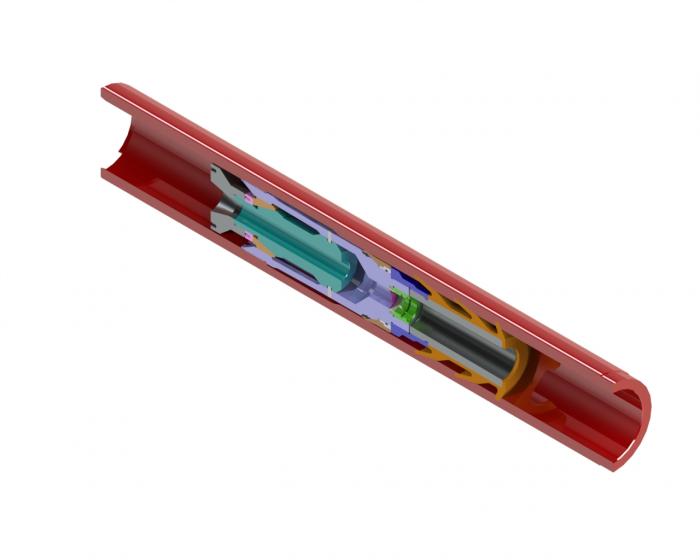
A major challenge in lengthy horizontal or highly deviated wellbores is running the casing string to depth. Drag between the casing string and the formation can often exceed the load capacity of the casing hook, preventing tools from reaching optimal setting depth. This challenge is compounded in shallow horizontal wells. Finding a way to minimize the drag is the key to extending the reach of highly deviated and horizontal wellbores.

A technique developed to “float” the casing into the wellbore using buoyancy-assisted casing equipment (BACE) allows operators to run casing to the bottom of these particularly challenging wellbores. Paired with floating equipment, the application of BACE traps lightweight fluid or air in the lower section of the casing string, thereby reducing the weight of the casing. The lighter weight reduces drag by lifting the casing string away from the formation wall and minimizes the surface area contact of friction.

This technique enables increased running depth and decreased potential for casing buckling or sticking. To simplify its application, BACE is fully integrated with the casing string, and it helps reduce risk because it has no outer shear pins posing potential leak points. Additionally, the tool doesn’t require debris barriers that can obstruct free flow in the casing. As opposed to other methods or alternatives, BACE does not leave behind any trace of rupture disc within the casing wall, which can impair fracture plug deployment during plug-and-perf operations.

Three recent jobs in unconventional shale plays involving lengthy lateral casing strings illustrate the effectiveness of the BACE technology to overcome challenges.

Reaching out in the Western Hemisphere

In the first case study an operator planned an extended lateral well of about 3,962 m (13,000 ft), anticipating challenges getting the casing to planned depth. The operator also was concerned about the compatibility of equipment throughout the casing string for cementing and future operations.

Halliburton performed analysis on the wellbore and determined that the best way to set the casing would be to use BACE along with a fullbore pressure-operated fracturing sleeve. Additional torque and drag analysis identified the need to create a buoyant chamber at the heel of the wellbore.

While the service company was executing the job, BACE ruptured at the planned applied casing pressure. After successfully removing the buoyant air chamber, technicians launched the bottom plug from the surface, landed it down on the BACE plug and released it to initiate displacement. During the cement job the plugs were successfully pumped through the RapidStart Initiator Casing Test without incident, proving compatibility and allaying concerns the operator had in the planning stage.

Challenges in the Eastern Hemisphere

In the second case study an operator planned to run about 3,200 m (10,500 ft) of casing in a lateral wellbore and achieve both planned total depth (TD) and topof- cement for zonal isolation. Because the job would be the operator’s longest lateral, it was extremely concerned about successfully executing to plan.

Halliburton performed torque and drag analysis using the wellbore parameters and determined BACE would be the best course of action placed at the heel of the wellbore. Additionally, cement design modeling suggested the use of an external sleeve inflatable packer collar (ESIPC) for second-stage cementing. Executing the job, the extended- reach casing was floated to planned TD using BACE, and the success of the run eliminated the contingency of running a smaller liner to achieve TD. All displacement measurements for the cement plugs and the BACE were in accord with the job design, and the ESIPC functioned properly, enabling the displacement of the second-stage cementing to achieve planned top of cement.

Specialty casing application with fiber optics

In the third case study an operator sought to set casing in a well with a true vertical depth of 3,246 m (10,650 ft), a measured depth of 6,390 m (20,967 ft) and a bottomhole temperature of 137.7 C (280 F). The operator also wanted to run fiber optics as it considered the well something of a “science project” to monitor in situ conditions and provide data for future well development in the area.

The Halliburton team proposed using BACE and, after conducting torque and drag analysis with wellbore conditions, it determined the technology would work best near the heel of the wellbore. The subsequent four months of planning and preparation for the job entailed mobilizing the necessary downhole tools, surface equipment and field personnel to the site and conducting a critical well review to ensure all elements of the operation were coordinated.

The execution phase began with the team positioning the BACE about 2,438 m (8,000 ft) from the end of the string and then successfully floating the casing and fiber optics to TD. Next, pressure inside the casing was increased to 1,250 psi and ruptured the disc as planned, which separated the 10 parts per gallon well fluid from the air-filled chamber. Finally, the team circulated about 1,000 bbl of fluid to ensure that all of the air in the buoyancy chamber was depleted, after which the cement job was performed.

With critical data being fed back to the operator, the BACE provided a successful outcome, according to the operator. During the planning phase the operator estimated the job of running fiber optics with the casing would take three to five days at a pace of running about four joints of casing per hour. By using BACE the operator was able to run about 14 joints of casing per hour and cut three days from the operation, reducing time and costs.

As lengthy horizontal and highly deviated wellbores become increasingly common, the application of this type of technology could become a more widely used technique in more places around the world.

source: www.epmag.com
Read MoreExtend Lateral Reach with Buoyancy-assisted Casing Equipment (BACE)